Philadelphia Eagles · Mar 18, 2026
AI for Impact
Keynoted the Philadelphia Eagles' 12th annual Eagles Care Summit at Lincoln Financial Field on March 18, 2026, delivering "AI for Impact" to more than 300 community and business leaders.
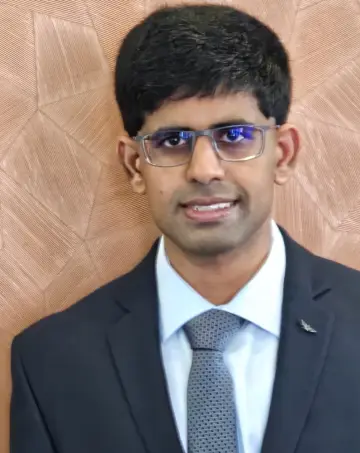 Sairam Krishnan
I keynoted the Philadelphia Eagles’ 12th annual Eagles Care Summit at Lincoln Financial Field for more than 300 community and business leaders. I designed and taught a two-session course at HP, an AI adoption and change-management workshop for Morgan Lewis, and an AI strategy session for PBS, and presented knowledge graphs and small language models to Atos.
Keynoted the Philadelphia Eagles' 12th annual Eagles Care Summit at Lincoln Financial Field on March 18, 2026, delivering "AI for Impact" to more than 300 community and business leaders.
Designed an executive AI curriculum built on original Wharton research and taught it to C-suite leaders at HP, Morgan Lewis, PBS, and the Philadelphia Eagles, helping executives evaluate, govern, and deploy AI.
Designed and taught an AI strategy session for PBS.
What generative AI is and isn’t, how large language models work, and where they fail.
Privacy and governance frameworks as the first step, and how they set what AI can safely be used for.
Designed and taught an AI adoption and change-management workshop for the firm’s trainers and champions.
The innovation adoption curve, Deloitte Business Chemistry, and the MAPPR model for diagnosing resistance: Motivation, Ability, Permission, Proof, and Reinforcement.
Participants listed why partners, associates, and staff would refuse AI. Gemini sorted that board into ten resister personas, from the accuracy skeptic to the billable-hour traditionalist. In a live roleplay, Gemini played one persona while I used the CLEAR framework to win them over. Groups then wrote persuasion messages for their own persona and designed a champion’s toolkit: a green, yellow, and red guide to which tasks are safe for AI, office hours, flash cards, and prompt-off competitions.
Designed and taught a two-session course at HP.
How large language models work and where they fail, from bias to hallucination; choosing among ChatGPT, Gemini, Claude, Copilot, Perplexity, and NotebookLM; the H4W and COSTAR prompt frameworks; and AI across the software development lifecycle. Participants rewrote one message for four audiences, built a slide deck from three reports, and generated a clickable prototype in Gemini.
Retrieval-augmented generation, vector databases, and knowledge graphs; custom GPTs; the difference between AI workflows and agents, and a checklist for when an agent is worth building; and AI governance. Participants built a business-requirements translator and designed an IT troubleshooting agent.
Presented what a knowledge graph is, how it enriches questions before they reach a model, and how it checks the model’s answer afterward, then where graphs go next: sub-graphs by topic, failure graphs, codified expertise, and the graph behind an API. Covered small language models next: what they are, when to go small and when to go big, a live setup of a local model in five minutes, and how they change the way people work.
Web Applications Course Developer · Teaching Assistant
Redesigned the Web Applications course with the professor, planning a 20-lecture semester from client-side code and HTTP through relational and NoSQL databases, servlets, security, and Django. Built the client-side and server-side exercise sets and reference survey apps in Spring MVC, Play, and Django, and instructed 105+ students as Agile Product Owner for their final projects.